Fortnight Shipping Notes: What the GTS Constellation Actually Built This Sprint
A short round-up of what our sister brands shipped in the last two weeks — including a multi-tenant SaaS migration war story, a canonical-domain SEO incident, an og:image audit, a self-correcting content pipeline, and an adversarial code-review practice — with links to the full write-ups on each brand.
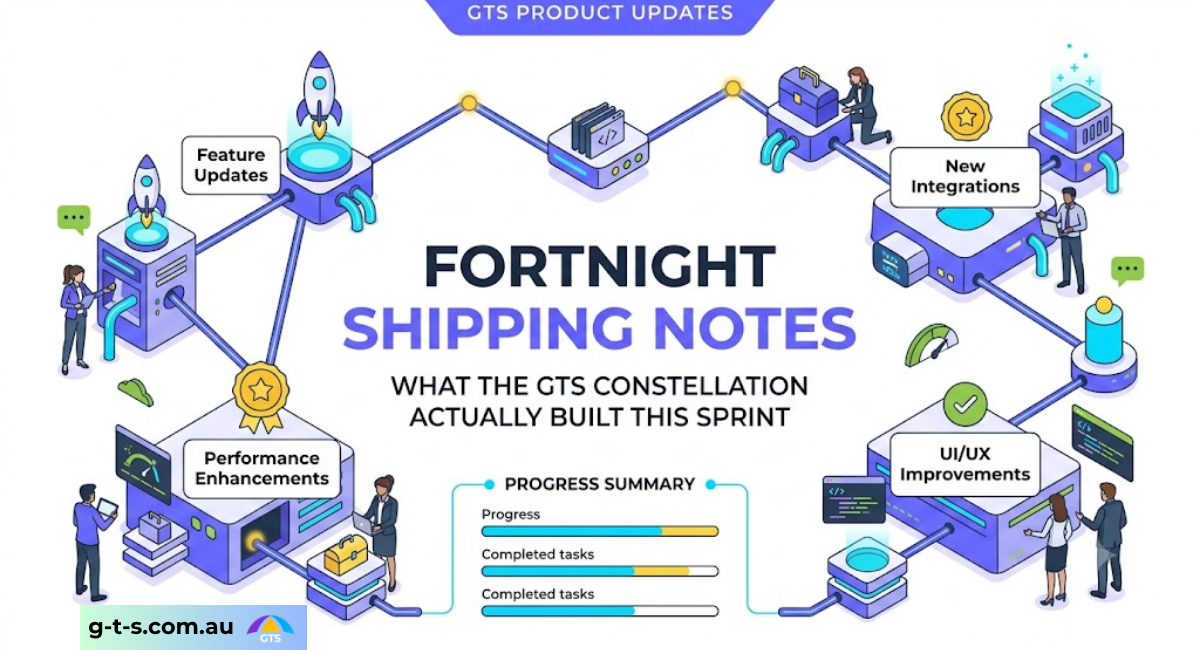
We run five active brands across the GTS constellation, each with its own audience and its own blog. Twice a month we round up what actually landed across the constellation — real engineering work, real SEO fixes, real leadership decisions — so nobody has to check five sites individually to see what happened. Here is the round-up for the fortnight ending 16 July 2026.
Cloud Geeks Insights — Three Deep DevOps Posts
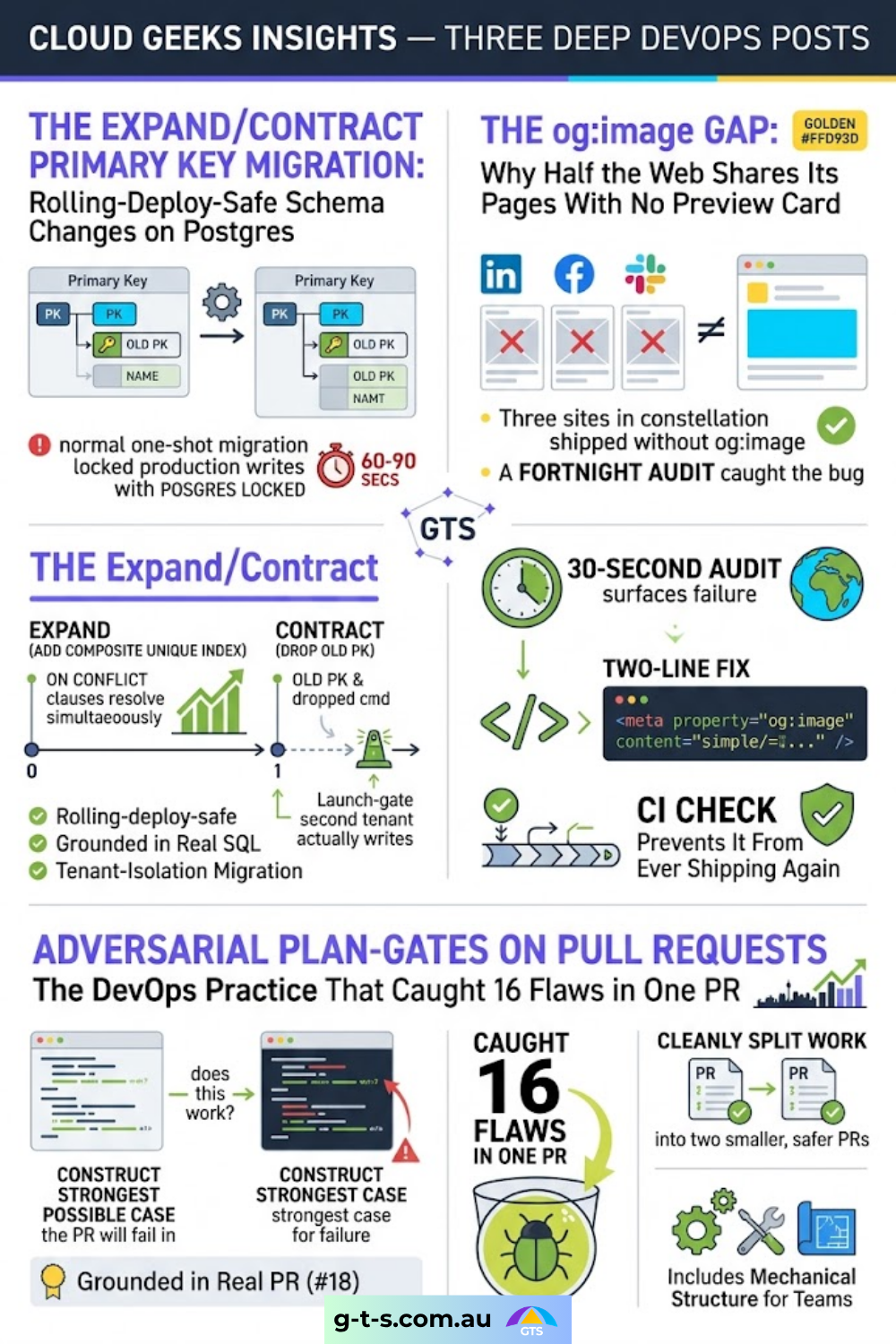
The Expand/Contract Primary Key Migration: Rolling-Deploy-Safe Schema Changes on Postgres
The war-story write-up of a Postgres primary-key widening that would have taken 60-90 seconds of production writes with it under a normal one-shot migration. Splits the change into expand (add composite unique index, keep old PK — both ON CONFLICT clauses resolve simultaneously) and contract (drop old PK, launch-gated until the second tenant actually writes). Grounded in the actual SQL from a recent tenant-isolation migration on our multi-tenant apps backend.
The og:image Gap: Why Half the Web Shares Its Pages With No Preview Card
Three sites in the constellation shipped without og:image in the same fortnight (a bug we caught during a routine audit). Every share on LinkedIn, Facebook, and Slack looked broken. The post is the 30-second audit that surfaces the failure on any site, the two-line fix, and a CI check that prevents it from ever shipping again.
Adversarial Plan-Gates on Pull Requests: The DevOps Practice That Caught 16 Flaws in One PR
The counter-practice to standard code review: instead of asking “does this work?”, the reviewer’s job is to construct the strongest possible case that the PR will fail in production. Grounded in a real PR (#18 on one of our internal repos) whose adversarial gate surfaced 16 distinct flaws and cleanly split the work into two smaller, safer PRs. Includes the mechanical structure for teams that want to try this without buying new tooling.
Cosmos Web Tech — The Canonical-Domain Incident
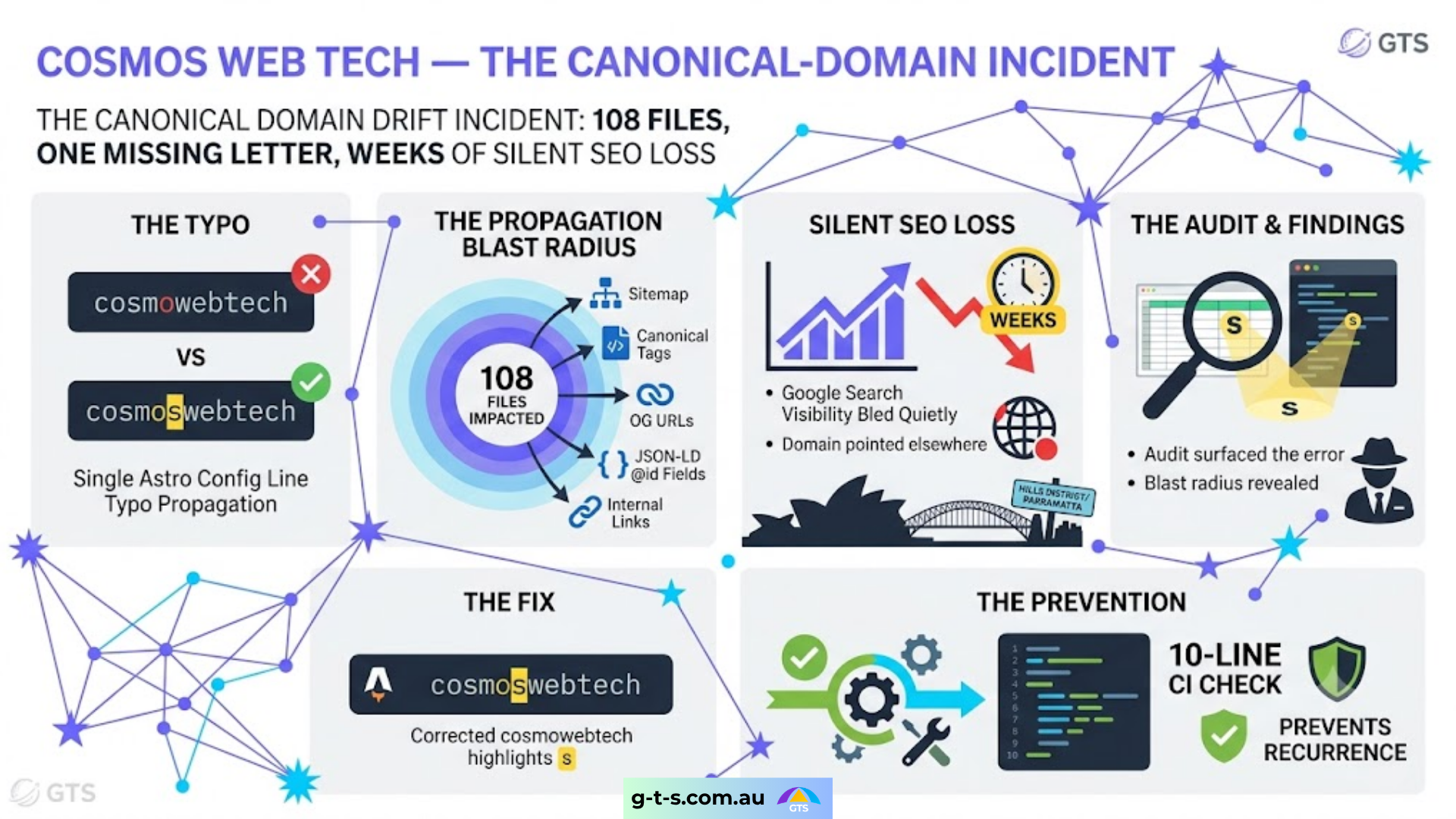
The Canonical Domain Drift Incident: 108 Files, One Missing Letter, Weeks of Silent SEO Loss
A single typo in one Astro config line — cosmowebtech vs cosmoswebtech — propagated into 108 files (sitemap, canonical tags, OG URLs, JSON-LD @id fields, internal links). Every crawlable metadata field on the site was pointing at a domain we do not own. Google Search visibility bled quietly for weeks before anyone noticed. The post is the audit that surfaced the blast radius, the fix, and the 10-line CI check that prevents recurrence.
Ash Ganda — The Founder-Leverage Piece
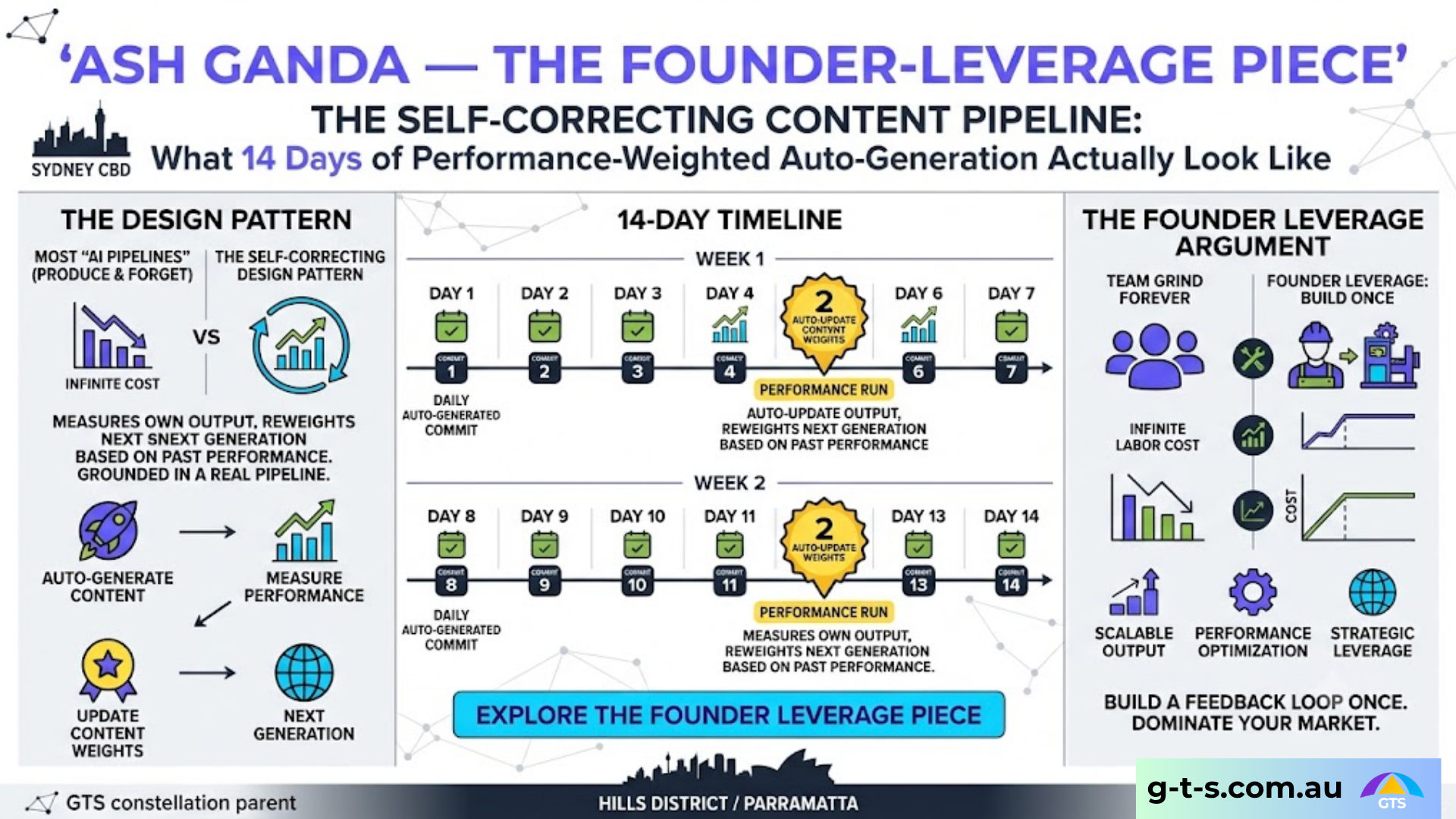
Most “AI content pipelines” produce and forget. The interesting design pattern is the one that measures its own output and reweights what it generates tomorrow based on what performed yesterday. Grounded in a real pipeline we run — 14 consecutive daily auto-generated commits punctuated by two auto-update content weights based on performance runs. The leadership-level argument for why founders should build this once rather than hire teams to grind through it forever.
Awesome Apps — Nothing New This Fortnight
Awesome Apps did not publish new content in this window. Ongoing work on the multiplayer engine and telemetry system continues; we will roundup those as a series once the online-multiplayer rollout is complete on all five headline games.
What This Sprint Actually Bought Us
Five posts across three brands is not the point. The point is the pattern.
Every one of these posts documents real engineering or operational work our team did in the last fortnight. Each one turns a war story we would have paid for anyway (the tenant-isolation migration, the SEO incident, the PR review process) into a compounding content asset that ranks for problem-shaped keywords other operators are actively searching. Each post that ranks is a signal to future clients that we have real depth in the area it covers.
This is the compounding version of “we should really publish more.” Not “we should write more blog posts” — but “we should systematically turn the technical work we already do into public-facing artefacts.” Every one of the posts above was going to be a Slack message inside the team. Turning it into a blog post takes one to two additional hours of work per piece. Those hours pay off for years, in Search rankings and in credibility signals that shorten sales cycles for the parent business.
If you run an Australian small business with an engineering, operations, or professional-services function, this is the leverage worth building into your operating rhythm. Ship the work. Write it up. Publish it. Compound.
Get the Round-Up in Your Inbox
We do this every two weeks. If you would rather have it emailed than remember to check the blog, subscribe below and we’ll send the next one on 30 July 2026.
Related Reading From Prior Sprints
- 329 Skills, 17 Lessons: What Systematic Knowledge Management Does for a Development Team — the meta-argument for why the constellation runs this kind of documentation practice at all.
- Cloud, Web and App: Choosing the Right Digital Stack for Your Business — the strategy piece the technical posts above sit underneath.